Jesus and Social Justice
By: Steve Carey
“Please Forgive me and Change me”
It was hot, unbearably hot in the Capital Mall that afternoon. The morning chill, with its jackets and sweaters, was gone, replaced by the smells and sounds of a million men packed in so close that at times I felt I could not breathe. Shoulder to shoulder, front to back, as close to the stage as I dare, we all looked up expectantly, knowing the event would be historic.
Viewing our current civil unrest through the lens of ‘The letters In Red’ requires us to see Luke 11 in a new light. Early in Jesus’ ministry, he stood up to the powerful, pointing a finger squarely at those who felt distant from the hardships of others, the fruit that falls so naturally from the tree of past sin.
Luke 11: 45-46 One of the lawyers answered him, “Teacher, in saying this, you reproach us also?” And he said, “Woe to you lawyers also! For you load men with burdens hard to bear, and you yourselves do not touch the burdens with one of your fingers.
“Yes”! was the answer to their question, a resounding “I do reproach you also.” It was a reproach for the inaction which allows the burden to flourish. Jesus’ words cut through denial and spiritual laziness, holding them guilty of the sin of omission. Is there a better description of white privilege than “burdens hard to bear,” burdens that are not touched by those in power, sorrows not felt or acknowledged by those born into the right family, socio-economic bracket, or skin color? They may never have killed or have been slaveholders, yet Jesus holds them responsible none the less for its collective and continuous impact.
“Dear God, I am a sinner. … Please forgive me and change me.” was the call from the stage, answered in chanting unison. “Dear God, I am a sinner. … Please forgive me and change me.” Speaker after speaker preached repentance and acknowledgment of generational sin. Prayers were offered as the thunderous loudspeakers and multi-trons announced the message across a sea of Christian men from the Capitol Building as far back as the Lincoln memorial. Soon my discomfort gave way to calmness, the claustrophobia, into oneness with the crowd. I had lost my church partners to the crowd long ago, now alone, I was in communion with strangers in one of the most powerful experiences of my life. All around me, white men like myself, all wanting a deeper Christian relationship and a willingness to sacrifice our pride to get it. Something was giving birth within me, a cleansing, a kinship with each prayer.
Luke 11: 47–48 Woe to you! for you build the tombs of the prophets whom your fathers killed. So you are witnesses and consent to the deeds of your fathers; for they killed them, and you build their tombs.
We tend to feel better about ourselves if we can build something, say something, write something to find a peaceful coexistence with our past like ignoring bones in a newly white-washed tomb. Jesus and ‘The Letters In Red’ hold us to a higher standard, one that requires not just activity, but accomplishment towards undoing the sins and “deeds of your fathers.” Generational curses are a common theme in the Old Testament. Jesus calls us to see the past in our present, which can give us hope for the future. He confronts us, drawing us away from our self-interest, from our comfort and our sense of innocence, and labels us complacent in the slavery of the past, which continues to build our country’s wealth.
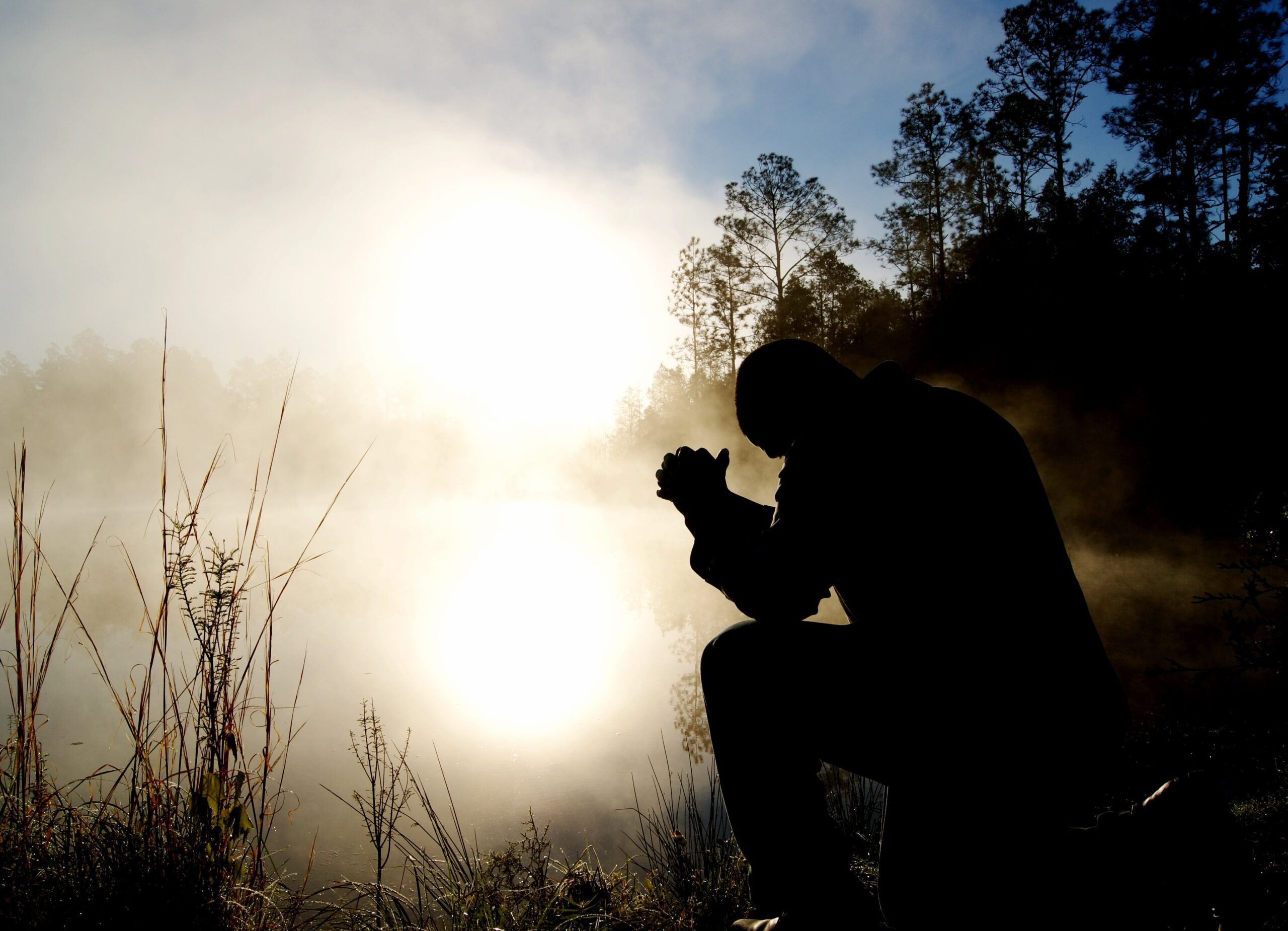
The first call to kneel was awkward. Shoulder bumped shoulder as my knees began to fold only to find my head bumping into the back of the man in front of me. From the rear, I could feel the head of the man behind me in my back, then my butt. My knees finally found the ground, and I lifted my head. Some around me were still standing, their shadows over me as if I was in a forest of tall trees. Then slowly, light returned like a sunrise as all the men made their way to the ground, the stage some thirdly yards away and fifteen feet above.
Luke 11:50-51 that the blood of all the prophets, shed from the foundation of the world, maybe required of this generation, from the blood of Abel to the blood of Zechari’ah, who perished between the altar and the sanctuary. Yes, I tell you, it shall be required of this generation.
Jesus held responsible not just those who committed horrible acts but also those who allowed consequences and ramifications of those acts to flourish and continue in their aftermath. If Jesus spoke today, He might say, “The blood of George Floyd to the blood of Rayshard Brooks who perished at the Wendy’s drive-through will be required of this generation.” Neither may have been a prophet, but neither were worthy of needless racially charged death, racism which finds its root in slavery and now lives within our affluence. Both George and Rayshard were created in God’s image, with His likeness, bound and packaged in His love from birth.
Just as Jesus required accountability of His generation, so He requires it of ours. We will be held accountable for our sins of omission just as others will be for sins of commission, both in this world and the Kingdom that is coming. It is on us to remedy what we can both individually and corporately of the sins of our fathers.
The crowd quieted as the stage filled with separate minorities, Women, Asian, Native American, Hispanic and Black. The Preacher called out, ‘Lord we repent of our father’s treachery to your children, to Women, to the Asian, to the Native American, to the Hispanic and to the Black Man, we repent of our racism, we ask your forgiveness for the sins we have committed against our brothers and sisters, and we ask forgiveness of those we have offended and damaged, the Women, the Asian, the Native American, the Hispanic and the Black”. With bended knee and hands held high in the air, quickly came the reply from over Eight Hundred thousand strong “Lord, we repent.”
I was among those in repentance that Oct 5th, 1997. It was called “The Million Man March, Stand in the Gap, Promise Keepers.” The sincerity I felt at that moment I have not felt since, and for that, I am ashamed. It was a strong and powerful cleansing, an honesty that brings recovery, tears which clean the windows of the soul, empowering those who have lived a lifetime in poverty or looking over their shoulder, having only the smallest part of the “the American dream.”
I felt it, was a part of it, so I know we can find our way back to it again. Imagine, white Christian men, leading the church towards repentance for our omission sins, for our father’s committed sins. Imagine it; white Christian men united not by theology or denomination, not by left or right or any earthly affiliation but by the desire to please Him and bring relief to our troubled world. I do not have to imagine it, for I have seen it. I was there, I experienced it, and I feel we can find our way back there again and sustain it if we are willing to have the courage to say “Dear God, I am a sinner. … Please forgive me and change me”.